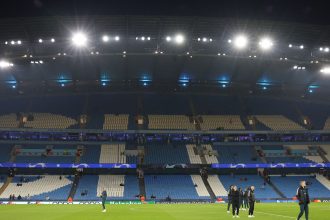
The worst thing about football is the short-termism.
How long does it take for the media to get on a manager’s back? Sometimes it only takes one game. But even if it took an entire season, that might even be too quick.
The problem with expectations in football is that no one is a miracle worker, yet some managers get instant results from their group. That, in turn, means that everyone is judged by that standard of instant success.
It’s not the media’s call, though, of course. Nor is it the fans’ call. When a manager is sacked, that’s down to the owners and the board – the ones who are in charge, and the ones who, ultimately, stand to lose out financially from poor decision making, especially in the Premier League these days, where clubs will literally lose millions for each place they drop in the table and can barely contemplate sheer catastrophe of dropping into the Football League.
So you’d hope, really, that the board are the sensible ones, no matter how the media call it.
[ad_pod id=’now-tv’ align=’centre’]
When it comes to Pep Guardiola it’s the short-termism that comes through the loudest. Forget about the glee some observers exhibit when they talk about Guardiola’s failures in his first season in charge. Forget about the fact that said they called him a fraud even when he was at Bayern Munich and Barcelona. Forget about the fact they want him to fail not because they don’t like his style of football, but because they want to be vindicated when it comes to their deep seated belief in English exceptionalism. It’s not these commentators I’m worried about.
That’s idiocy. We all know it. Writing anything at all in a national newspaper or online blog when you have an agenda to push is simply idiotic. What brought you into journalism in the first place? What motivated you to spend your life making words magically appear on the screen, anyway? Was it really your goal in life to attack a football manager disingenuously in attacks based on straw-manning and a narrative you’ve carefully crafted for years? What a sad little life you must have.
No, they’re not the dead souls who concern me. It’s the intelligent debate around Guardiola that concerns me.
There should be debate. There should be criticism of Manchester City this season. A side that is so expensively assembled shouldn’t be floundering as often as City have this season. The same goes for their cross-town rivals. They quite simply shouldn’t sit fifth and sixth – and that’s not really up for debate. Money isn’t everything, and it’s an easy attack to fling, but it’s also rather true: what’s the point of spending hundreds of millions of pounds to find yourself in a worse league position to last season. (Even if their points haul is better, is it really £100m better?)
But when it comes to City – and to United, too – the debate should be prefaced with one huge caveat that changes the meaning of everything said thereafter: that Guardiola took over for a ‘three-year project’.
Whether you think a phrase like that should have nothing to do with football is a separate issue. Whether you think that’s nonsense business-speak is a separate issue. And whatever you think of a three-year timeline is a separate issue, too. All that matters is that the club have publically stated that’s their aim and the aim of their manager.
So why is Pep Guardiola suddenly under pressure after only a few months?
The reason is short-termism and the refusal to actually accept that a three-year project can ever exist in the modern game.
Guardiola, for his part, should feel no pressure. His side have been terrible in defence and scintillating in attack, for the most part. His job now is to make sure his team don’t concede as many goals from counter attacks. His goalkeeper can’t save a shot, but his job is either to put up with Bravo or else get a new goalkeeper in the summer who can save shots – the bigger issue, though, is defending the deadly counters in the first place.
And beyond that there is no pressure. Because the very nature of a three-year project surely requires an acceptance that it doesn’t end after only one year. Surely winning every trophy under the sun is the end goal, not the immediate one.
So forget about the attacks on Guardiola’s pretentiousness, his nationality, his knowledge of the league or the fact he’s a threat to the idea of English exceptionalism. Forget about those who make a living destroying. Instead, think about constructing.
Construction means criticising City with a view to how they can get better for the remainder of the season and over the next few years. It means pinpointing mistakes honestly and with no agenda, it means building on the foundations that are already there.
Why try to limit the potential successes of a football club, even if it’s not the club you support yourself? Why try to do anyone down for the sake of it (or even for the sake of some other belief you may have)?
Sometimes managers deserve criticism and sometimes they are not up to the job. The treatment of both managers of the Manchester clubs show us that the reaction to that is way over the top. Sort-term thinking in football doesn’t just make debate endless and tedious: it brings debates into the hands of the small-minded populist demagogues who want only to strap you, Guantanamo-like, into a feeding chair and shove their agenda into your stomach. And once that happens, football just smells bad.
[ad_pod id=’Shoot-Xmas-Survey’ align=’left’]
[ad_pod id=’playwire’ align=’center’]